
Generative AI in Production: Moving Beyond Demos to Real Use Cases
Generative AI in Production: Moving Beyond Demos to Real Use Cases
Generative AI has captured the attention of businesses across every industry. Companies are experimenting with AI-generated content, conversational assistants, automated workflows, code generation tools, and intelligent search systems. Impressive demos are everywhere, and many organizations are eager to integrate AI into their operations.
However, there is a major difference between a successful AI demo and a production-ready AI system.
While demos often showcase creativity and innovation, real-world business environments demand reliability, scalability, governance, security, and measurable business outcomes. Many organizations quickly discover that building a flashy proof of concept is easy, but deploying enterprise-grade AI systems that operate consistently at scale is far more complex.
This is why professional Generative AI Development has become increasingly important. Businesses now need structured implementation strategies that move AI from experimentation into practical, scalable business operations.
In this blog, we’ll explore why many generative AI projects fail to reach production, the key requirements for production-ready systems, practical real-world use cases, and how Custom Generative AI Solutions help organizations create long-term business value.
Why Most Generative AI Projects Never Reach Production
Many companies begin their AI journey with excitement and optimism. They launch pilot projects, build internal demos, or experiment with AI tools to generate text, images, summaries, or customer responses.
However, most of these initiatives never evolve into enterprise-grade production systems.
The reason is simple: production environments require far more than model outputs.
Businesses must address several operational challenges before AI can support real workflows reliably.
Common Reasons AI Projects Fail
Lack of Reliability
AI-generated responses can sometimes produce hallucinations, inaccurate information, or inconsistent outputs.
While this may be acceptable during experimentation, production systems require predictable and trustworthy performance.
Weak Integration with Business Systems
Many AI demos operate independently and are not connected to CRMs, ERPs, databases, or internal workflows.
Without integration, AI systems cannot deliver meaningful operational value.
Security and Compliance Risks
Generative AI systems often process sensitive customer and business information.
Organizations must implement:
- Access controls
- Encryption
- Compliance frameworks
- Audit logging
- Data governance policies
High Operational Costs
Running large language models at scale can become expensive without proper optimization strategies.
Poor Workflow Alignment
AI tools fail when they are not aligned with actual business processes or operational goals.
Organizations investing in structured Generative AI Development are significantly more likely to overcome these barriers and achieve measurable ROI.
What Production-Ready Generative AI Actually Requires
Production AI systems must operate consistently, securely, and efficiently under real-world business conditions.
This requires much more than simply deploying a language model.
Reliability and Output Consistency
Enterprise AI systems need mechanisms that improve output quality and reduce inaccurate responses.
This often includes:
- Validation layers
- Fact-checking systems
- Prompt optimization
- Confidence scoring
- Human review workflows
Reliable outputs are critical for customer-facing and operational use cases.
Scalability
Production systems must support large volumes of concurrent users and requests without performance degradation.
Scalable Generative AI Development includes:
- Cloud infrastructure optimization
- Load balancing
- Model caching
- Distributed processing
- Efficient inference pipelines
Scalability becomes especially important for enterprise AI deployments with high daily usage.
Security and Compliance
AI systems frequently interact with confidential business information.
Production-ready AI environments require:
- Data encryption
- Role-based access control
- Compliance monitoring
- Secure APIs
- Governance frameworks
Businesses operating in regulated industries must prioritize compliance from the beginning.
Integration with Existing Systems
AI systems generate the most value when deeply integrated into operational workflows.
This includes connections with:
- CRM platforms
- ERP systems
- Internal knowledge bases
- Customer support systems
- Analytics platforms
- Communication tools
Strong integrations transform AI from a standalone tool into a core operational capability.
Monitoring and Governance
Production AI systems require continuous oversight.
Organizations must monitor:
- Response quality
- System performance
- Operational costs
- Security events
- User feedback
- Model drift
Governance frameworks ensure transparency and long-term reliability.
Professional Generative AI Development teams prioritize monitoring and governance as core architectural requirements.
High-Impact Real-World Use Cases
Intelligent Content Creation
One of the most common enterprise AI applications is automated content generation.
Businesses use AI to create:
- Marketing copy
- Product descriptions
- Internal documentation
- Reports
- Email campaigns
- Personalized customer communication
AI-generated content improves productivity while maintaining consistency across channels.
However, production systems require workflow approvals, brand guidelines, and quality validation mechanisms.
AI Chatbot Development
Modern conversational AI systems are far more advanced than traditional rule-based chatbots.
Professional AI Chatbot Development now focuses on creating intelligent systems capable of:
- Understanding context
- Managing complex conversations
- Accessing business data
- Executing workflows
- Personalizing responses
These systems are increasingly used across:
- Customer support
- Sales operations
- Employee assistance
- Healthcare interactions
- Internal knowledge management
Businesses deploying advanced conversational systems often experience major improvements in operational efficiency and customer experience.
Code Generation and Developer Productivity
Software development teams increasingly use AI tools to accelerate engineering workflows.
AI systems assist with:
- Code generation
- Documentation writing
- Testing automation
- Debugging assistance
- Refactoring suggestions
These tools improve developer productivity while reducing repetitive engineering tasks.
Production-grade systems require strong governance to ensure code quality and security compliance.
Personalized Customer Experiences
Modern customers expect highly personalized digital experiences. Many organizations deliver these AI-driven experiences through cross-platform applications that ensure consistent engagement across devices.
Generative AI helps businesses create:
- Dynamic recommendations
- Personalized messaging
- Customized onboarding
- Tailored marketing campaigns
- Adaptive user experiences
These capabilities improve engagement and customer retention.
Many organizations now view personalization as one of the most valuable AI solutions for business growth.
Document Processing and Knowledge Management
Large organizations manage enormous amounts of unstructured information.
Generative AI helps automate:
- Document summarization
- Contract analysis
- Knowledge retrieval
- Internal search systems
- Policy interpretation
This improves operational efficiency and accelerates information access across teams.
Why Businesses Need Custom Generative AI Solutions
Generic AI platforms often provide limited customization and operational control.
While they may work for simple use cases, enterprise environments usually require more specialized capabilities.
This is why businesses increasingly invest in Custom Generative AI Solutions.
Fine-Tuning on Proprietary Data
Custom AI systems can be trained or optimized using internal business data.
This improves:
- Accuracy
- Relevance
- Domain expertise
- Operational alignment
Industry-specific knowledge significantly improves AI performance.
Better Security and Data Privacy
Custom deployments allow businesses to maintain stronger control over:
- Data handling
- Infrastructure
- User permissions
- Compliance requirements
This is especially important for healthcare, finance, legal, and enterprise operations.
Workflow Customization
Every organization has unique processes.
Custom AI systems integrate directly into operational workflows instead of forcing businesses to adapt to generic tools.
Competitive Differentiation
Custom AI capabilities create long-term strategic advantages.
Businesses using tailored AI systems can offer experiences and operational efficiencies that competitors cannot easily replicate.
Organizations investing in Custom Generative AI Solutions often achieve stronger ROI than businesses relying entirely on generic AI platforms.
Implementation Best Practices
Start with High-Value Use Cases
Focus initially on workflows where AI can generate measurable operational impact.
Examples include:
- Customer support automation
- Content generation
- Internal knowledge management
- Workflow acceleration
Use Retrieval-Augmented Generation (RAG)
RAG systems improve AI accuracy by retrieving relevant information from trusted business knowledge sources before generating responses.
This significantly reduces hallucination risks.
Implement Human Review Processes
Critical outputs should include human oversight and approval workflows.
This improves quality control and compliance.
Continuously Monitor Performance
Businesses should regularly track:
- Response quality
- Cost efficiency
- User satisfaction
- Workflow impact
- Operational performance
Continuous optimization improves long-term scalability.
Build Iterative Feedback Loops
AI systems improve significantly through ongoing feedback and refinement.
Professional Generative AI Development teams use analytics and operational insights to continuously enhance model performance.
Common Challenges Businesses Face
Hallucinations and Accuracy Issues
AI systems sometimes generate incorrect or misleading information.
Solution:
Use retrieval systems, validation workflows, and fact-checking layers.
Infrastructure Costs
Large-scale AI deployments can become expensive.
Solution:
Optimize inference pipelines and use scalable cloud infrastructure.
Data Governance Complexity
AI systems require access to business information while maintaining compliance.
Solution:
Implement strong governance policies and secure architecture.
User Trust and Adoption
Employees and customers may initially hesitate to trust AI systems.
Solution:
Use transparent workflows and gradual implementation strategies.
Businesses deploying production-ready AI solutions for business must address both technical and organizational challenges simultaneously.
Frequently Asked Questions
Q1. Why do most Generative AI projects fail to reach production?
Most projects fail because businesses underestimate challenges related to scalability, integration, security, governance, and operational reliability.
Q2. What makes production Generative AI Development different from demos?
Production systems require reliability, scalability, monitoring, governance, compliance, and seamless integration with business workflows — elements often missing from simple AI demos.
Q3. Why are Custom Generative AI Solutions important for enterprises?
Custom Generative AI Solutions provide stronger security, better accuracy, deeper workflow integration, and greater control compared to generic AI tools.
Q4. Is AI Chatbot Development still valuable in 2026?
Yes. Modern AI Chatbot Development focuses on advanced conversational systems capable of handling complex customer and operational workflows with high levels of personalization and intelligence.
Q5. How long does it take to move Generative AI into production?
Most enterprise AI implementations take several months, depending on infrastructure readiness, integration complexity, governance requirements, and business objectives.
Conclusion
Moving generative AI from experimental demos into real production environments requires much more than powerful models. Businesses must build scalable, secure, integrated, and reliable systems capable of supporting real operational workflows.
Professional Generative AI Development helps organizations create intelligent systems that deliver measurable business value through automation, personalization, operational efficiency, and improved customer experiences. Companies investing in production-ready AI strategies today will be far better positioned to compete in the rapidly evolving digital economy.
Looking to build scalable AI solutions or custom AI agents? Contact us today.
Move Generative AI from Ideas to Production
Building a successful AI demo is easy. Creating a secure, scalable, and production-ready AI system requires the right strategy, infrastructure, and integration expertise.
Techvaders helps organizations implement enterprise-grade Generative AI solutions that deliver measurable business value through automation, personalization, workflow optimization, and intelligent customer experiences.
Contact our team today to discuss your Generative AI project.
Uncategorized
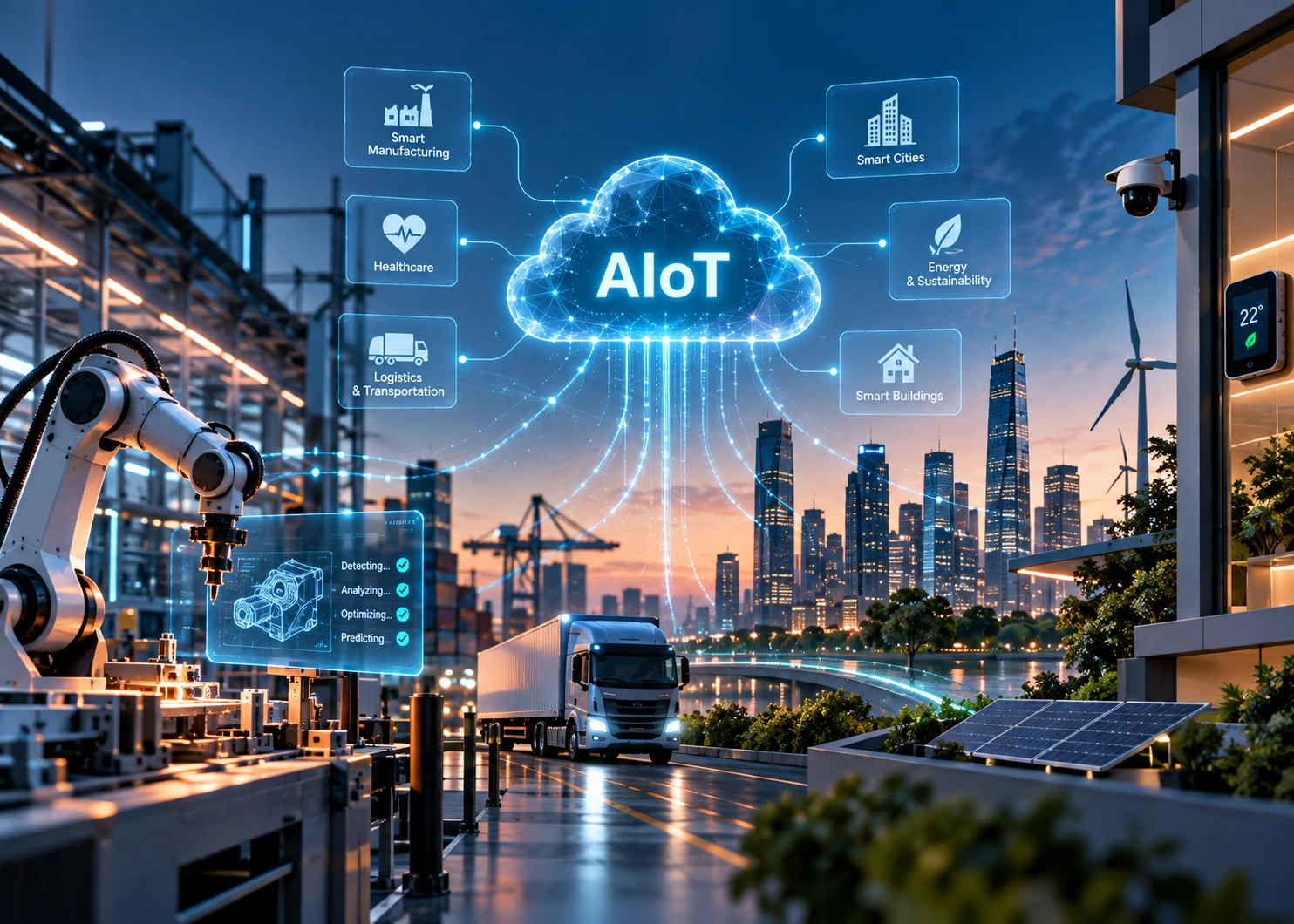
AIoT: How AI and IoT Are Creating Smarter Connected Systems
The Internet of Things (IoT) has transformed the way businesses connect devices, collect data, and monitor physical environments. But collecting data is only the beginning. The next step is making that data intelligent. AIoT, or Artificial Intelligence of Things, combines artificial intelligence with IoT to create connected systems that can analyze information, identify patterns, make…

Uncategorized
AI-Native Software Development: How AI Is Changing the Way Software Is Built
Software development is entering a new phase. Artificial intelligence is no longer being used only as a coding assistant that suggests a few lines of code. AI is increasingly becoming part of the entire software development lifecycle—from planning and architecture to coding, testing, deployment, monitoring, and maintenance. This shift is known as AI-native software development.…
Uncategorized
How to Migrate a Domain Safely Without Downtime
Your domain is more than a web address. It connects customers to your website, email, applications, landing pages, and other digital services. When you need to move your domain to a new registrar, poor planning can lead to unnecessary downtime, broken email, DNS problems, or delays. The good news is that domain migration does not…
Delivering scalable software that drives real business growth.

