
AI-Native Software Development: How AI Is Changing the Way Software Is Built
AI-Native Software Development: How AI Is Changing the Way Software Is Built
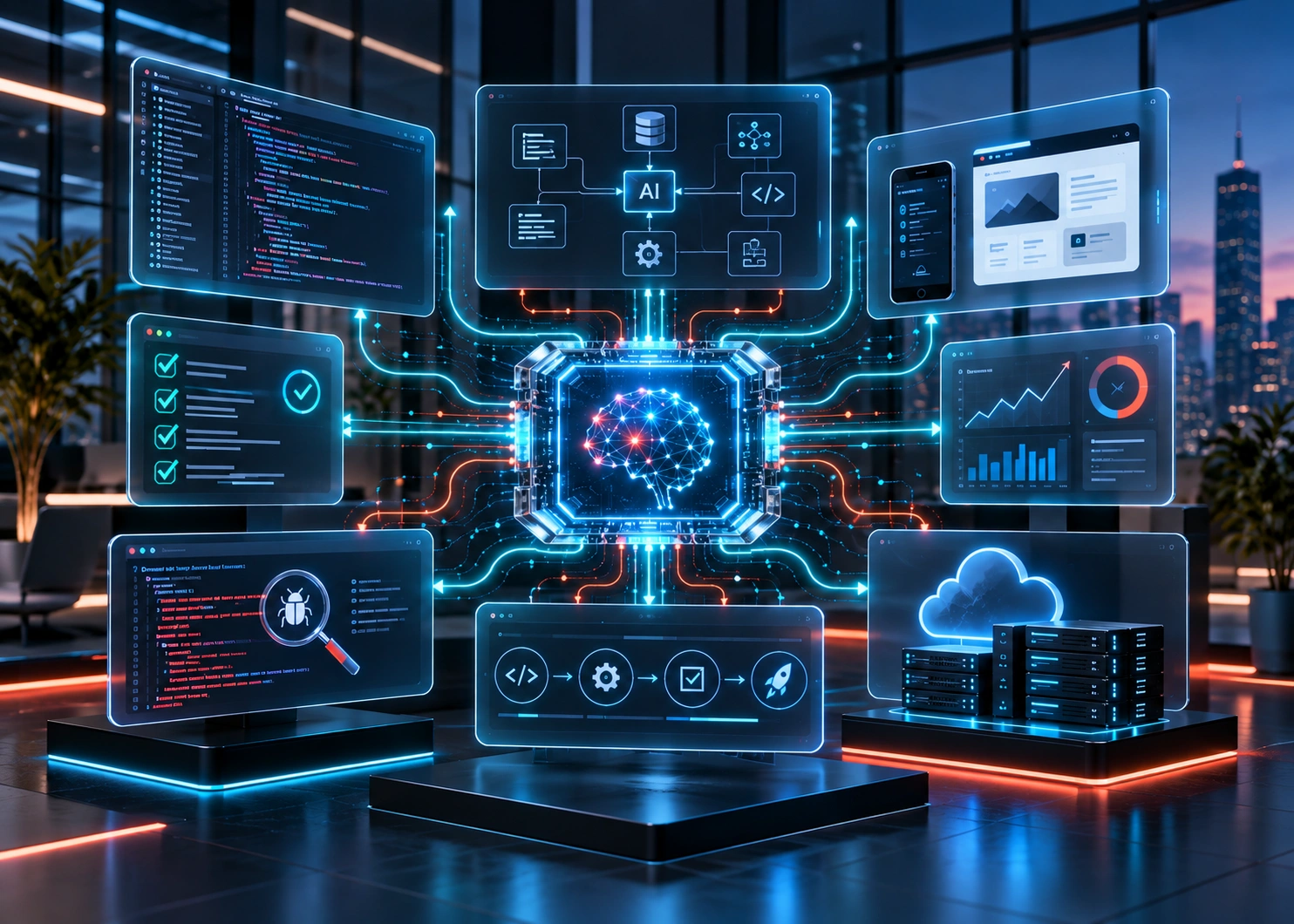
Software development is entering a new phase. Artificial intelligence is no longer being used only as a coding assistant that suggests a few lines of code. AI is increasingly becoming part of the entire software development lifecycle—from planning and architecture to coding, testing, deployment, monitoring, and maintenance.
This shift is known as AI-native software development.
In traditional development, humans define requirements, design the architecture, write code, test applications, fix bugs, and manage releases. In an AI-native approach, developers work alongside AI systems and increasingly autonomous AI agents that can perform many of these activities while humans provide direction, validation, architecture decisions, and governance.
In 2026, Gartner lists AI-native development platforms and multiagent systems among its major strategic technology trends. Gartner also reports that generative and agentic AI are reshaping how software is planned, built, tested, and operated.
What Is AI-Native Software Development?
AI-native software development is an approach to building software in which artificial intelligence is integrated into the development process and, increasingly, into the architecture of the software itself.
Instead of simply adding AI features to an existing application, organizations design development workflows around AI capabilities from the beginning.
AI can assist with:
- Requirements analysis
- Software architecture
- Code generation
- Code reviews
- Testing
- Debugging
- Documentation
- Security analysis
- Deployment
- Performance monitoring
- Software maintenance
The important distinction is that AI-native development goes beyond using tools such as coding assistants. The objective is to create a development environment where AI can understand project context, work across multiple systems, execute tasks, and continuously improve software workflows.
AI-Assisted Development vs AI-Native Development
These concepts are related but not identical.
AI-assisted development means developers use AI tools to help complete individual tasks. For example, an AI assistant may generate a function, explain an error, or create a unit test.
AI-native development goes further. AI becomes an integrated participant throughout the software lifecycle.
| AI-Assisted Development | AI-Native Development |
| AI helps with individual tasks | AI participates across the SDLC |
| Developer writes most code | AI can generate substantial implementations |
| Mostly reactive | Increasingly autonomous |
| Human-driven workflow | Human + AI workflow |
| Tool-focused | System and process-focused |
| Limited project context | Context-aware AI workflows |
Gartner describes this evolution as a movement from interactive generative AI assistants toward AI agents operating across the software development lifecycle.
How AI Is Changing Software Development
1. AI Is Changing Requirements and Planning
Software development traditionally starts with meetings, documents, user stories, specifications, and technical planning.
AI can now help transform natural-language requirements into structured development tasks.
For example, a business could describe:
“We need a mobile application that allows customers to book appointments, receive reminders, and communicate with support.”
An AI-powered development workflow can help transform that requirement into user stories, technical requirements, database structures, API specifications, and development tasks.
Human experts still need to validate these decisions, but AI can significantly reduce the time required to move from an idea to an actionable development plan.
2. AI Coding Agents Are Changing Programming
AI coding tools have progressed beyond simple autocomplete.
Modern AI coding agents can analyze repositories, navigate codebases, generate files, modify existing code, run tests, identify errors, and iterate on implementations.
Gartner reported in 2026 that enterprise AI coding agents are moving from AI-assisted development toward more agentic software development across planning, creation, and code review.
This does not mean developers disappear.
Instead, developers increasingly become responsible for:
- Defining system architecture
- Establishing technical standards
- Reviewing AI-generated work
- Managing security
- Validating business logic
- Making complex engineering decisions
The role shifts from writing every line manually toward directing, validating, and governing increasingly capable development systems.
3. AI Can Accelerate Software Testing
Testing is another area being transformed by AI.
AI systems can help generate:
- Unit tests
- Integration tests
- Test cases
- Edge-case scenarios
- Regression tests
- API tests
- Test documentation
AI can also analyze failures and suggest potential fixes.
This creates the possibility of development workflows where code generation and testing happen continuously rather than sequentially.
Research from Thoughtworks describes AI-native delivery pipelines in which AI can analyze code for bugs and security vulnerabilities, suggest tests, and identify potential deployment risks.
4. AI Is Improving Code Reviews and Documentation
Large software projects often suffer from outdated documentation and inconsistent coding practices.
AI can analyze repositories and help developers understand:
- What a component does
- How APIs interact
- Where dependencies exist
- Which modules may be risky
- Where documentation is missing
- How new code affects existing systems
AI can also assist with automatically generating technical documentation and code summaries.
This becomes particularly valuable when businesses have large or legacy codebases.
5. AI Is Transforming DevOps
AI-native development doesn’t stop when code is committed.
AI can increasingly participate in:
- CI/CD workflows
- Deployment analysis
- Infrastructure management
- Log analysis
- Performance monitoring
- Incident detection
- Root-cause analysis
This creates a more continuous software lifecycle.
Instead of developers waiting for a production problem and then manually investigating it, AI systems can continuously analyze telemetry and identify potential anomalies.
The Rise of Agentic Software Development
One of the biggest developments in AI-native software development is the emergence of AI agents.
An AI coding assistant generally responds to a developer’s request.
An AI agent can potentially plan a task, use tools, execute multiple steps, evaluate results, and continue working toward an objective.
For example:
Requirement → Architecture → Code → Tests → Debugging → Review → Deployment
Instead of treating each step as a completely separate activity, agentic systems can connect these stages into an automated workflow.
Recent industry research has already demonstrated production-oriented experiments in which AI agents generate substantial portions of enterprise software from natural-language specifications, including application code, testing, infrastructure, and deployment components.
What Are the Benefits of AI-Native Software Development?
Organizations adopting AI-native development can potentially benefit from:
Faster Development
AI can automate repetitive development tasks and accelerate prototyping.
Lower Development Friction
Developers can spend less time searching documentation, writing repetitive code, and manually handling routine tasks.
Faster Testing
AI can generate and execute additional test scenarios throughout development.
Better Developer Productivity
Developers can focus more attention on architecture, product decisions, security, and complex problems.
Continuous Improvement
AI-powered development workflows can analyze feedback, errors, telemetry, and performance data to inform future improvements.
Faster Time to Market
By shortening multiple stages of the software lifecycle, organizations can potentially move products from concept to production faster.
However, AI does not automatically guarantee better software. Gartner’s 2026 roadmap emphasizes the need to prioritize AI use cases, govern adoption, and demonstrate measurable business value.
What Are the Risks of AI-Native Development?
AI-native development also introduces new challenges.
Security
AI-generated code can contain vulnerabilities, insecure dependencies, or flawed assumptions.
Hallucinations
AI systems can generate technically plausible but incorrect implementations.
Quality Control
Generated code still requires testing, review, and validation.
Context Limitations
AI systems may misunderstand complex business rules or undocumented legacy behavior.
Governance
Organizations need policies defining what AI systems can access, modify, deploy, and execute.
Technical Debt
Generating code faster does not necessarily mean creating maintainable software faster.
This is why AI-native development requires strong engineering foundations, including architecture standards, testing frameworks, documentation, security controls, and human oversight.
How Businesses Can Prepare for AI-Native Development
Businesses do not need to completely replace their existing development processes overnight.
A practical transition can start with targeted use cases.
Step 1: Identify repetitive development tasks.
Find areas where developers spend significant time on repetitive work.
Step 2: Introduce AI-assisted development.
Use AI for coding, documentation, testing, debugging, and code analysis.
Step 3: Build context-aware workflows.
Give AI systems access to appropriate project documentation, architecture standards, APIs, repositories, and development guidelines.
Step 4: Introduce agentic workflows.
Allow AI agents to execute well-defined multi-step development tasks under controlled permissions.
Step 5: Add governance and security.
Establish human approval points, access controls, testing requirements, monitoring, and audit processes.
Step 6: Measure results.
Track development velocity, defect rates, deployment frequency, engineering hours, quality, security findings, and business outcomes.
What Is the Future of AI-Native Software Development?
The future is likely to move beyond AI that simply writes code.
Software development is increasingly moving toward systems where AI can understand objectives, interact with development environments, coordinate specialized agents, test implementations, and continuously evaluate results.
Gartner’s 2026 technology outlook highlights both AI-native development platforms and multiagent systems, while Thoughtworks identifies emerging concepts such as goal-based development environments and continuous AI-driven delivery. These developments point toward a software industry where the boundary between product requirements, engineering, testing, and operations becomes increasingly interconnected.
For businesses, the important question is therefore not simply:
“Should we use AI to write code?”
A more strategic question is:
“How should we redesign software development so AI can create measurable business value while remaining secure, reliable, and under human control?”
Final Thoughts
AI-native software development is changing how software is planned, built, tested, deployed, and maintained.
AI coding assistants are only one part of this transformation. The larger opportunity comes from combining AI models, coding agents, automation, software architecture, testing, DevOps, data, and human expertise into a connected development ecosystem.
For startups and enterprises, adopting this approach can create opportunities to accelerate development, improve productivity, modernize legacy systems, and build intelligent software products.
The companies that benefit most will not necessarily be the ones that generate the most code with AI. They will be the ones that build theright AI-native workflows, establish strong engineering controls, and connect AI capabilities to measurable business outcomes.
At TechVaders, we help businesses explore and build AI-powered software systems, intelligent applications, automation workflows, and scalable digital platforms designed for the next generation of software development.
Ready to explore what AI-native software development could look like for your business?
Uncategorized
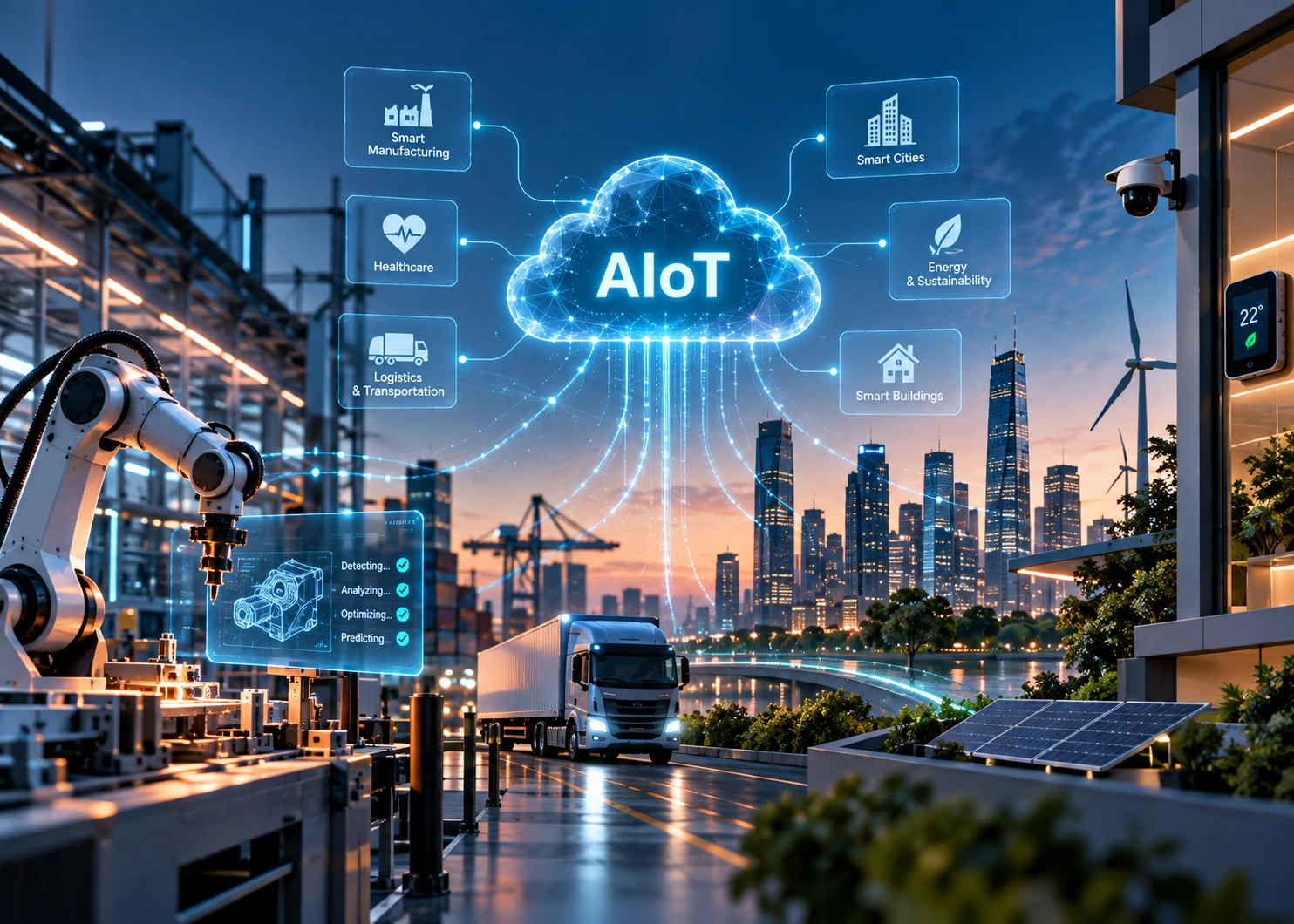
AIoT: How AI and IoT Are Creating Smarter Connected Systems
The Internet of Things (IoT) has transformed the way businesses connect devices, collect data, and monitor physical environments. But collecting data is only the beginning. The next step is making that data intelligent. AIoT, or Artificial Intelligence of Things, combines artificial intelligence with IoT to create connected systems that can analyze information, identify patterns, make…

Uncategorized
How to Migrate a Domain Safely Without Downtime
Your domain is more than a web address. It connects customers to your website, email, applications, landing pages, and other digital services. When you need to move your domain to a new registrar, poor planning can lead to unnecessary downtime, broken email, DNS problems, or delays. The good news is that domain migration does not…
Uncategorized
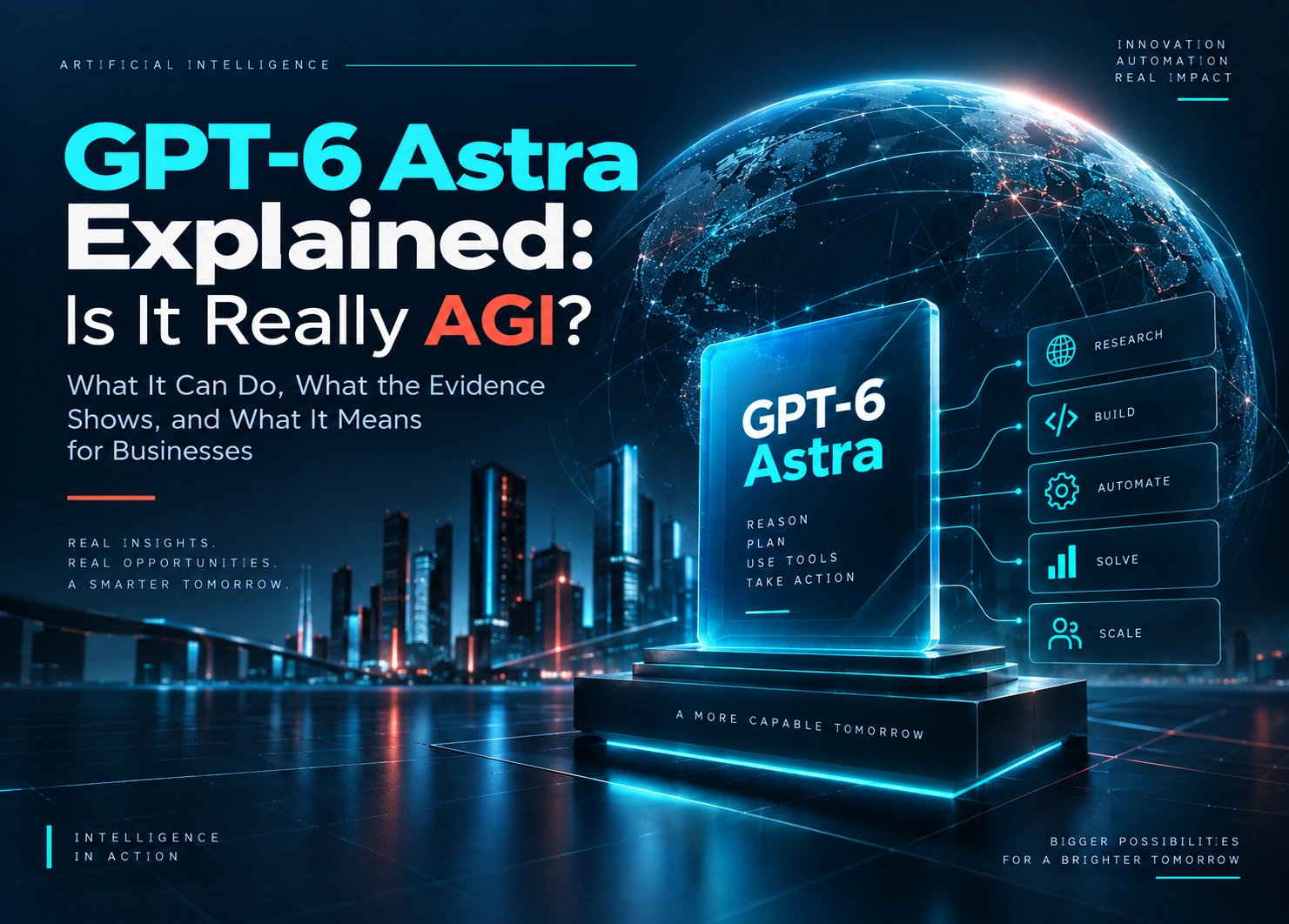
GPT-6 Astra Explained: Is It Really AGI and What Does It Mean for Businesses?
Artificial intelligence is moving from systems that answer questions to systems that can reason, use computers, make decisions, and complete multi-step tasks. The arrival of GPT-6 Astra represents an important step in that transition. OpenAI describes Astra as its most capable model to date, with major advances in computer use, software engineering, cybersecurity, scientific reasoning,…
Delivering scalable software that drives real business growth.

