
AI Integration Services: Connecting AI Agents with Real Business Systems
AI Integration Services: Connecting AI Agents with Real Business Systems
Many businesses are rapidly investing in AI technologies to improve productivity, automate operations, and enhance customer experiences. Companies are deploying AI chatbots, autonomous workflows, predictive analytics systems, and Intelligent AI Assistants across departments. However, despite growing investment, many AI initiatives fail to generate meaningful business impact.
The problem is rarely the AI itself.
In most cases, AI systems struggle because they are disconnected from the organization’s actual business infrastructure. AI agents may work well in isolated testing environments but fail when interacting with CRMs, ERPs, internal databases, legacy software, or operational workflows.
Without strong integration, AI becomes just another disconnected tool rather than a transformative business capability.
This is where professional AI Integration Services become essential. Integration enables AI agents to securely connect with existing business systems, access real-time data, automate workflows, and execute tasks across the organization.
In this blog, we’ll explore why AI integration is one of the biggest challenges businesses face today, how modern integration architectures work, the most common implementation patterns, and how companies can successfully deploy AI-powered systems at scale.
Why AI Integration Is the Biggest Challenge
Many organizations assume that deploying AI models is the hardest part of AI adoption. In reality, the most difficult challenge is integrating those systems into existing business operations.
Modern enterprises typically operate using dozens of disconnected systems, including:
- CRM platforms
- ERP systems
- Internal databases
- HR software
- Customer support tools
- Financial systems
- Cloud platforms
- Legacy infrastructure
Most of these systems were never designed to work with modern AI technologies.
As a result, businesses often face problems such as:
- Data silos
- Inconsistent workflows
- Limited API access
- Security restrictions
- Poor system interoperability
- Slow data synchronization
Without proper AI Integration Services, even highly advanced AI systems remain isolated and underutilized.
What Are AI Integration Services?
AI Integration Services focus on connecting AI-powered systems with real-world business infrastructure.
This includes integrating AI agents with:
- Enterprise applications
- Databases
- APIs
- Cloud services
- Operational workflows
- Communication platforms
- Analytics systems
The goal is to enable AI systems to interact intelligently with existing business environments while maintaining security, reliability, and scalability.
Modern integration strategies typically include:
- API development
- Middleware systems
- Workflow orchestration
- Data pipelines
- Authentication layers
- Event-driven architecture
- Monitoring systems
Professional teams specializing in AI Agents Development increasingly treat integration as a core component of successful AI deployment rather than a secondary consideration.
Why Integration Determines AI Success
Businesses often underestimate how much operational value depends on integration quality.
An AI assistant that cannot access customer records, update systems, or interact with workflows provides very limited value.
By contrast, integrated AI systems can:
- Automate complex operations
- Access real-time business data
- Trigger multi-step workflows
- Coordinate across departments
- Improve decision-making
- Reduce manual workload
This shift transforms AI from a standalone feature into a fully operational business capability.
Organizations investing in AI Integration Services typically experience faster automation success and stronger ROI compared to companies deploying disconnected AI tools.
Key Components of Successful AI Integration
Secure API Layer
APIs serve as the communication bridge between AI systems and business applications.
A secure API layer allows AI agents to:
- Read business data
- Update systems
- Trigger workflows
- Access operational tools
- Execute business actions
Security is critical because AI systems often handle sensitive information.
Modern API layers typically include:
- Authentication protocols
- Access permissions
- Encryption standards
- Rate limiting
- Audit logging
Strong API architecture improves both security and scalability.
Data Integration Pipelines
AI systems rely heavily on high-quality, real-time data.
Data integration pipelines connect AI platforms with:
- Databases
- CRMs
- ERP systems
- Cloud storage
- Analytics platforms
These pipelines ensure AI agents always have access to updated business information.
Modern pipelines often support:
- Real-time synchronization
- Batch processing
- Data transformation
- Event streaming
- Data validation
Efficient data movement is essential for Intelligent AI Assistants to perform accurately and consistently.
Workflow Orchestration Systems
As AI ecosystems grow, businesses often deploy multiple specialized agents working together.
Workflow orchestration systems coordinate these interactions.
Examples include:
- Routing customer requests
- Triggering automated approvals
- Managing multi-step processes
- Coordinating cross-department operations
Orchestration improves operational consistency and reduces process fragmentation.
Advanced AI Agents Development projects increasingly rely on orchestration engines to support scalable enterprise automation.
Memory and Context Management
One of the major advantages of modern AI agents is their ability to maintain context across interactions.
Memory systems allow AI agents to:
- Remember previous conversations
- Track workflow history
- Personalize responses
- Maintain operational continuity
This significantly improves the effectiveness of Intelligent AI Assistants in customer support, sales, HR, and operational automation.
Without proper memory management, AI interactions often feel fragmented and inconsistent.
Monitoring, Governance, and Compliance
As AI systems become more autonomous, governance becomes increasingly important.
Businesses need visibility into:
- AI decisions
- Workflow actions
- Data usage
- Security events
- Compliance requirements
Modern AI Integration Services include monitoring systems that provide:
- Audit trails
- Performance analytics
- Real-time alerts
- Operational dashboards
- Compliance reporting
Governance frameworks help businesses maintain transparency and operational control.
Common Integration Patterns Used Today
Event-Driven Integration
In event-driven systems, AI agents react automatically to business events.
For example:
- A new support ticket triggers an AI response workflow
- A payment failure triggers fraud analysis
- A sales inquiry activates lead qualification
This approach enables real-time operational responsiveness.
API-First Integration
API-first architecture focuses on building standardized communication layers between systems.
This approach improves:
- Scalability
- Flexibility
- Third-party integrations
- Future system expansion
Most modern AI Integration Services rely heavily on API-first development principles.
Hybrid Integration Models
Many enterprises still use on-premise infrastructure while adopting cloud-based AI solutions.
Hybrid integration models connect both environments securely.
This allows businesses to modernize operations gradually without replacing critical legacy systems immediately.
Agent-to-Agent Communication
Modern AI ecosystems increasingly involve multiple specialized agents working collaboratively.
Examples include:
- Sales agents
- Customer support agents
- Analytics agents
- HR automation agents
These systems communicate through centralized orchestration layers to coordinate complex operations efficiently.
This is becoming a major trend in enterprise AI Agents Development.
Best Practices for AI Agents Development
Design for Integration from the Beginning
AI systems should never be treated as isolated tools.
Integration planning must begin during the initial architecture phase.
Use Secure Authentication Protocols
AI systems often access sensitive operational and customer data.
Businesses should implement:
- OAuth authentication
- Role-based permissions
- Encryption standards
- Access controls
Security-first architecture reduces operational risk.
Implement Human-in-the-Loop Oversight
AI systems should include approval mechanisms for high-risk decisions.
Human oversight improves trust, governance, and operational reliability.
Start with High-Impact Integrations
Organizations should initially automate workflows that provide measurable business value while remaining technically manageable.
Examples include:
- Customer support automation
- CRM synchronization
- Workflow approvals
- Reporting automation
Starting small reduces implementation complexity while generating quick ROI.
Continuously Monitor Performance
AI systems require ongoing optimization.
Businesses should regularly monitor:
- Workflow efficiency
- Response quality
- System reliability
- Security events
- User satisfaction
Continuous improvement ensures long-term scalability.
Organizations using professional AI Integration Services typically achieve significantly higher implementation success rates compared to businesses attempting fragmented deployments.
Real-World Business Benefits of AI Integration
Successful AI integration creates measurable operational improvements across multiple business functions.
Improved Operational Efficiency
Integrated AI systems reduce repetitive manual work and accelerate workflows.
Better Customer Experiences
Many organizations also deploy integrated AI capabilities through cross-platform applications to improve customer engagement and accessibility. AI-powered support systems provide faster, more personalized service experiences.
Faster Decision-Making
AI systems process and analyze data in real time, enabling more agile business decisions.
Enhanced Scalability
Integrated AI ecosystems support business growth without requiring proportional increases in staffing. Connected IoT device integration strategies further improve scalability by enabling real-time communication across distributed systems.
Reduced Operational Costs
Automation reduces labor-intensive tasks and improves process efficiency.
Businesses deploying Intelligent AI Assistants often experience substantial productivity improvements across departments.
Common Challenges Businesses Face During AI Integration
Legacy System Limitations
Older systems often lack modern API capabilities.
Solution:
Use middleware layers and API wrappers to bridge compatibility gaps.
Data Quality Issues
Inconsistent or incomplete data reduces AI performance.
Solution:
Implement data governance and validation processes before deployment.
Security Concerns
AI systems increase operational exposure if security is weak.
Solution:
Use encryption, identity management, and continuous monitoring systems.
Organizational Resistance
Employees may resist operational changes introduced by automation.
Solution:
Provide training, transparency, and phased implementation strategies.
Working with experienced providers of AI Integration Services significantly reduces these risks.
Frequently Asked Questions
Q1. What are AI Integration Services?
AI Integration Services help businesses connect AI systems with existing software, databases, workflows, and operational infrastructure to enable intelligent automation and real-time decision-making.
Q2. Why do many AI projects fail without proper integration?
Many AI initiatives fail because isolated systems cannot effectively interact with business workflows, operational tools, or enterprise data sources, limiting their real-world impact.
Q3. Can Intelligent AI Assistants work with legacy systems?
Yes. Modern integration strategies use APIs, middleware, and hybrid architectures to connect Intelligent AI Assistants with older enterprise systems securely and efficiently.
Q4. Why is AI Agents Development important for scalability?
Professional AI Agents Development ensures AI systems are scalable, secure, adaptable, and capable of supporting enterprise-level workflows and integrations.
Q5. How long does AI integration typically take?
Smaller integrations may take several weeks, while enterprise-wide AI integration projects often require several months depending on complexity, security requirements, and the number of connected systems.
Conclusion
AI adoption alone does not guarantee business transformation. The real value of AI emerges when intelligent systems are deeply connected to operational workflows, enterprise infrastructure, and real-time business data.
Professional AI Integration Services help organizations transform disconnected AI tools into scalable, coordinated automation ecosystems capable of improving productivity, decision-making, and customer experiences across the business. As AI technologies continue evolving, businesses that successfully integrate intelligent systems into their operations will gain a major competitive advantage in efficiency, agility, and innovation.
Looking to build scalable AI solutions or custom AI agents? Contact us today.
Connect AI Agents with Real Business Systems
Looking to build scalable AI solutions, intelligent automation workflows, or custom AI agents?
Techvaders helps businesses implement advanced AI Integration Services, connect enterprise systems, and deploy secure automation ecosystems powered by modern AI technologies.
Whether you’re exploring Agentic AI Automation, workflow orchestration, or connected operational systems, our team can help you build scalable AI infrastructure designed for long-term growth.
Uncategorized
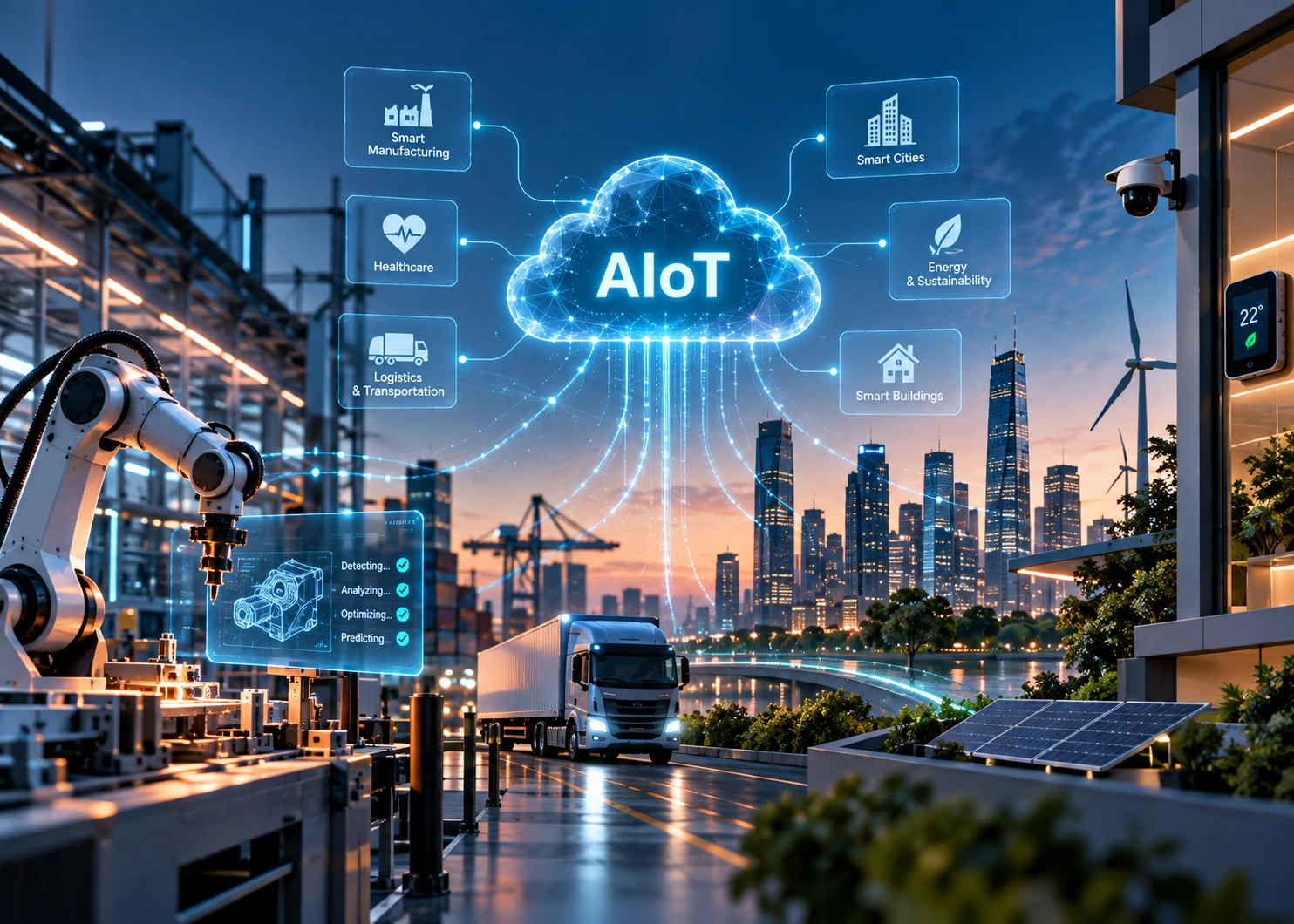
AIoT: How AI and IoT Are Creating Smarter Connected Systems
The Internet of Things (IoT) has transformed the way businesses connect devices, collect data, and monitor physical environments. But collecting data is only the beginning. The next step is making that data intelligent. AIoT, or Artificial Intelligence of Things, combines artificial intelligence with IoT to create connected systems that can analyze information, identify patterns, make…
Uncategorized
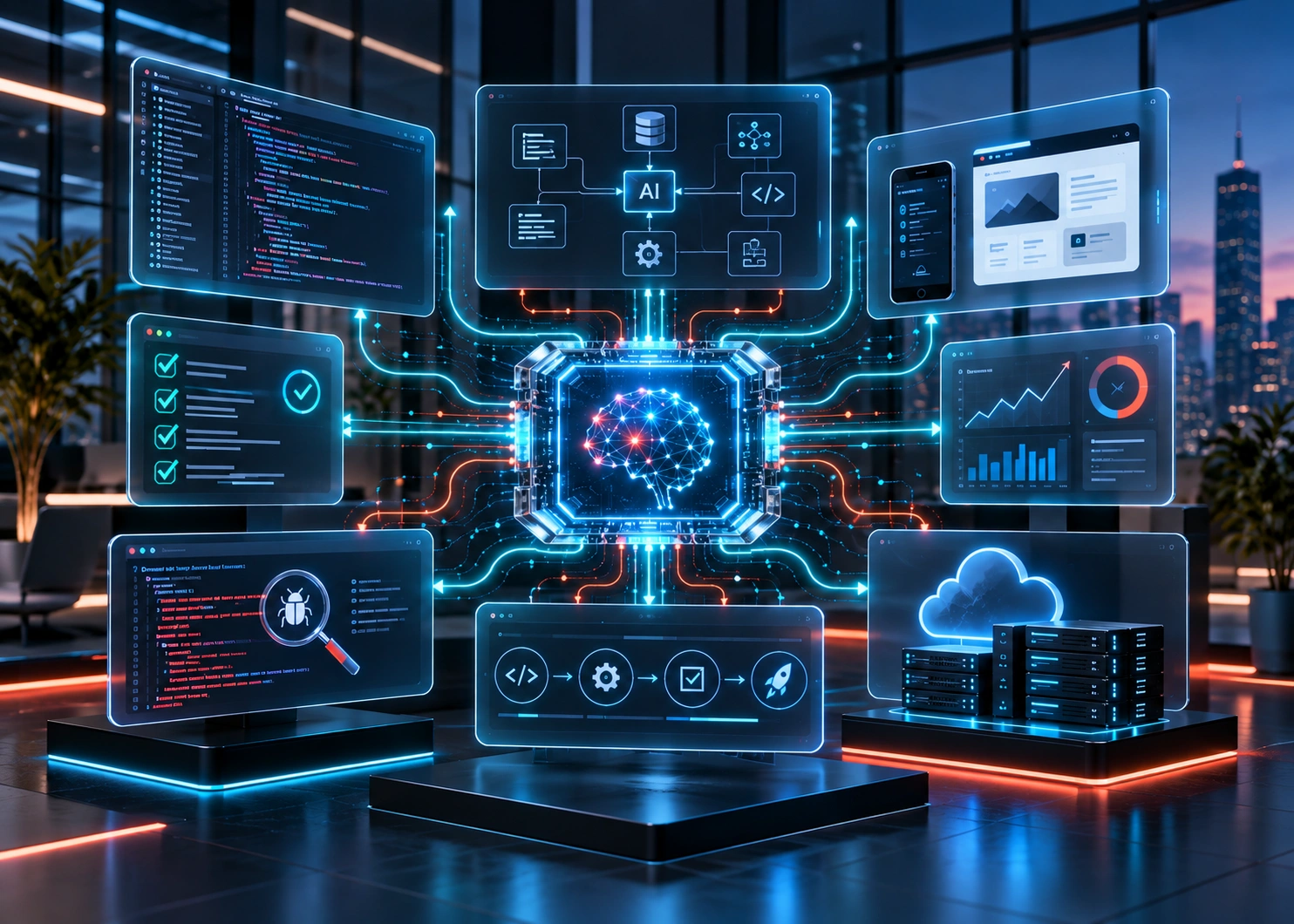
AI-Native Software Development: How AI Is Changing the Way Software Is Built
Software development is entering a new phase. Artificial intelligence is no longer being used only as a coding assistant that suggests a few lines of code. AI is increasingly becoming part of the entire software development lifecycle—from planning and architecture to coding, testing, deployment, monitoring, and maintenance. This shift is known as AI-native software development.…
Uncategorized
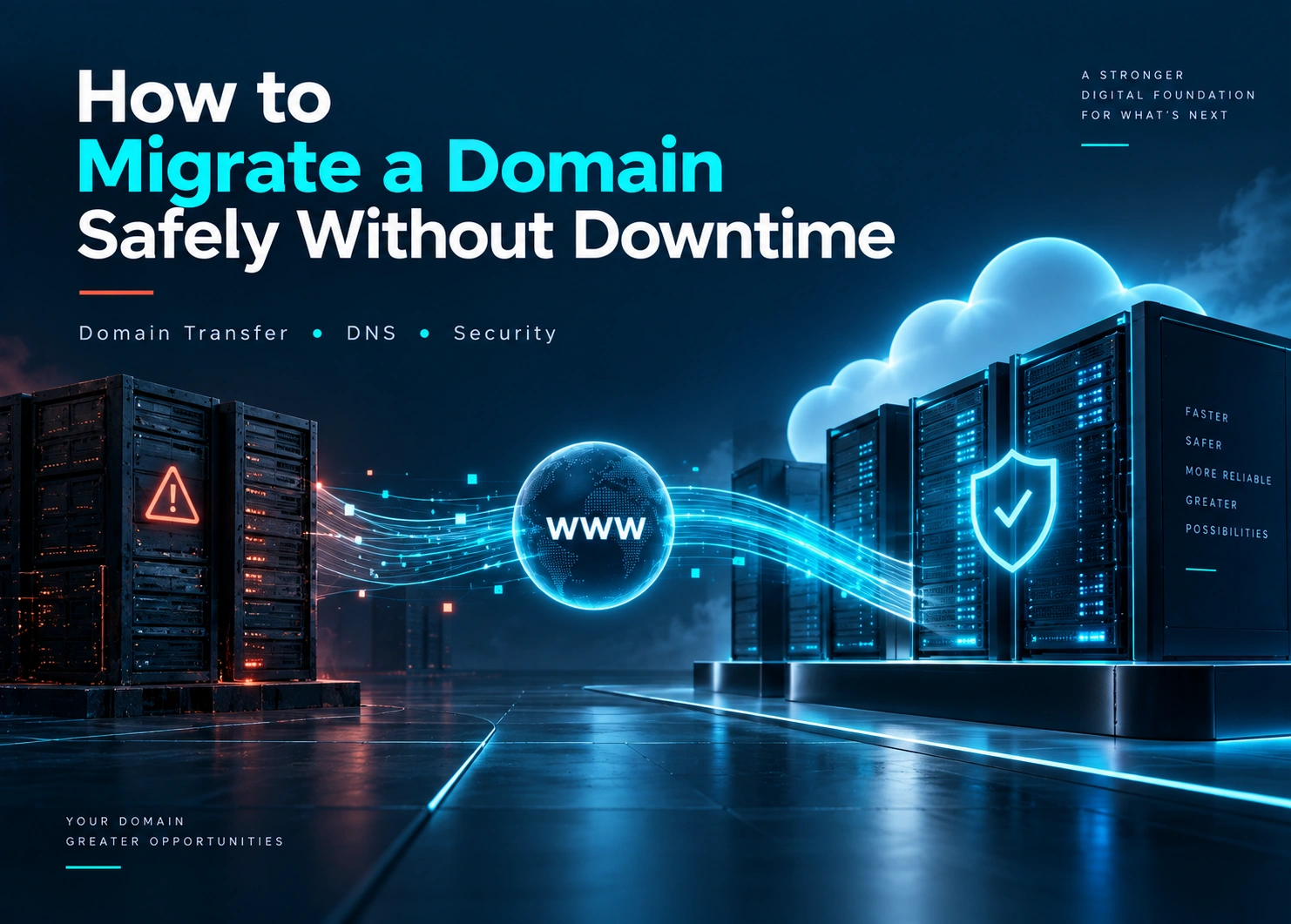
How to Migrate a Domain Safely Without Downtime
Your domain is more than a web address. It connects customers to your website, email, applications, landing pages, and other digital services. When you need to move your domain to a new registrar, poor planning can lead to unnecessary downtime, broken email, DNS problems, or delays. The good news is that domain migration does not…
Delivering scalable software that drives real business growth.

