
AI Automation Services: How Agentic AI Is Transforming Business Operations
AI Automation Services: How Agentic AI Is Transforming Business Operations
Modern businesses are under constant pressure to do more with fewer resources. Teams are overwhelmed by repetitive administrative work, disconnected workflows, growing customer expectations, and increasingly complex operations. While traditional automation tools have helped streamline some tasks, they often fail when processes become dynamic, unpredictable, or context-dependent.
This is where AI Automation Services are creating a major shift.
Powered by Agentic AI, modern automation systems can reason, plan, make decisions, and execute tasks with minimal human involvement. Unlike traditional rule-based systems that follow fixed instructions, Agentic AI adapts to changing scenarios, learns from outcomes, and continuously improves operational efficiency.
Businesses across industries are now using AI-driven automation to reduce manual workload, improve customer experiences, accelerate decision-making, and scale operations faster than ever before.
In this blog, we’ll explore how Agentic AI works, how AI Automation Services are transforming business operations, the biggest implementation challenges companies face, and why organizations are rapidly investing in intelligent automation strategies.
What Are AI Automation Services?
AI Automation Services involve using artificial intelligence technologies to automate business processes, make intelligent decisions, and execute tasks with minimal human intervention. Unlike traditional automation, AI-powered systems can adapt to changing conditions, learn from data, and continuously improve performance.
What Is Agentic AI and Why It Matters
Agentic AI refers to autonomous AI systems capable of performing tasks independently while working toward defined goals.
Traditional automation tools rely on pre-programmed rules. They only function properly when workflows remain predictable and structured. However, modern business environments are constantly changing, making rigid automation systems insufficient for many operational needs.
Agentic AI introduces a more advanced model of automation.
These systems can:
- Understand objectives
- Break goals into tasks
- Analyze information
- Make decisions
- Adapt to changing conditions
- Learn from outcomes
- Execute workflows autonomously
This shift moves businesses from simple automation to intelligent operational systems.
Professional AI Automation Services help organizations integrate these advanced AI capabilities into real business processes while ensuring scalability, governance, and reliability.
Why Businesses Are Moving Beyond Traditional Automation
Traditional automation tools are useful for repetitive and highly structured tasks. However, they struggle with:
- Unstructured data
- Contextual decision-making
- Multi-step workflows
- Dynamic customer interactions
- Cross-platform coordination
For example, a traditional automation workflow may process invoices based on predefined templates. But if the format changes or an exception occurs, human intervention becomes necessary.
Agentic AI systems can analyze exceptions, adapt to new inputs, and continue operating intelligently without requiring constant manual corrections.
This flexibility is one reason why AI Automation Services are becoming a critical part of digital transformation strategies.
Businesses no longer want automation that simply executes commands. They want intelligent systems capable of optimizing workflows and supporting strategic operations.
How AI Automation Services Work
Modern AI Automation Services combine multiple technologies to create intelligent operational ecosystems.
These systems are built using several foundational components.
Goal-Oriented AI Agents
AI agents are designed to understand high-level objectives rather than simple task instructions.
For example, instead of telling an AI system exactly how to respond to every customer inquiry, businesses can define broader goals such as:
- Improve customer satisfaction
- Reduce response times
- Increase lead conversion rates
The AI agent then determines the most effective actions required to achieve those goals.
This approach creates more adaptive and intelligent workflows.
Memory and Context Management
One major limitation of older automation systems was the inability to remember previous interactions.
Modern intelligent agents use:
- Short-term memory
- Long-term memory
- Context retention
- Historical data analysis
This allows Intelligent AI Assistants to maintain continuity across conversations, workflows, and decision-making processes.
For example, an AI assistant supporting customer service can remember previous issues, preferences, and interactions to provide more personalized support.
Reasoning and Decision Engines
Reasoning systems help AI agents evaluate multiple options before taking action.
Instead of following rigid workflows, AI systems can:
- Analyze situations
- Compare alternatives
- Predict outcomes
- Prioritize tasks
- Make recommendations
This makes AI-driven automation significantly more powerful than standard robotic process automation tools.
Businesses investing in AI Agents Development increasingly focus on building advanced reasoning systems that support complex operational decision-making.
Tool and API Integration
Modern AI systems rarely operate independently.
AI agents often connect with:
- CRMs
- ERP platforms
- Accounting software
- Email systems
- Databases
- Cloud platforms
- Customer support tools
Professional AI Automation Services ensure seamless integration between AI agents and existing business infrastructure.
This integration capability is essential for enterprise scalability.
Human-in-the-Loop Oversight
Despite major advancements in AI, human oversight remains important for sensitive or high-risk decisions.
Most enterprise AI systems include:
- Approval workflows
- Escalation systems
- Compliance checks
- Manual override capabilities
Human-in-the-loop models help businesses maintain control while still benefiting from automation efficiency.
Key Areas Being Transformed by Agentic AI
Customer Support and Service Operations
Customer support is one of the fastest-growing use cases for intelligent automation.
Modern Intelligent AI Assistants can:
- Handle customer inquiries
- Process refunds
- Troubleshoot issues
- Schedule appointments
- Escalate complex requests
- Provide multilingual support
Unlike basic chatbots, Agentic AI systems understand context and adapt conversations dynamically.
This improves both customer satisfaction and operational efficiency. Many businesses also deploy these intelligent systems through mobile applications to improve customer engagement and accessibility.
Sales and Lead Management
Sales teams spend significant time on repetitive administrative tasks.
AI agents now automate:
- Lead qualification
- CRM updates
- Follow-up emails
- Meeting scheduling
- Sales forecasting
- Personalized outreach
Businesses using AI Automation Services often see faster sales cycles and improved conversion rates.
AI-driven sales automation also enables teams to focus more on relationship building and strategic selling.
Finance and Accounting
Financial workflows are highly repetitive and data-intensive, making them ideal for intelligent automation.
Common AI automation use cases include:
- Invoice processing
- Expense management
- Financial reporting
- Fraud detection
- Compliance monitoring
- Cash flow forecasting
AI systems improve accuracy while significantly reducing manual workload.
Human Resources and Recruitment
HR departments increasingly use AI-driven systems to streamline recruitment and employee management.
Applications include:
- Resume screening
- Candidate matching
- Interview scheduling
- Employee onboarding
- Performance analysis
- Workforce analytics
Businesses implementing AI Agents Development for HR operations improve hiring efficiency while reducing administrative overhead.
Supply Chain and Logistics
Supply chain management involves large volumes of dynamic data and operational coordination.
AI-powered automation improves:
- Inventory forecasting
- Route optimization
- Vendor management
- Demand planning
- Warehouse operations
- Predictive maintenance
Many of these automation workflows rely on connected IoT devices that continuously collect operational data. These systems help businesses reduce operational delays and improve overall efficiency.
Major Benefits of AI Automation Services {#benefits}
Increased Productivity
Employees spend less time on repetitive administrative work and more time on strategic activities.
AI automation improves workflow efficiency across departments.
24/7 Operational Availability
AI agents operate continuously without breaks or downtime.
This is especially valuable for customer support, monitoring systems, and global operations.
Faster Decision-Making
AI systems process data in real time, enabling businesses to make faster and more informed decisions.
This improves agility in competitive markets.
Improved Accuracy
Automation reduces human error in repetitive workflows such as data entry, reporting, and transaction processing.
This improves reliability and operational consistency.
Better Scalability
AI systems can manage growing workloads without requiring proportional increases in staffing.
This creates significant operational leverage for growing businesses.
Organizations implementing AI Automation Services often report substantial reductions in manual workload while improving overall service quality.
Challenges Businesses Face When Implementing AI Automation
Legacy System Integration
Many businesses still rely on outdated infrastructure that lacks API compatibility.
This creates integration challenges during AI deployment.
Solution:
Use modular architecture and API-first development approaches to improve connectivity.
Data Quality Issues
AI systems depend heavily on accurate and structured data.
Poor data quality reduces automation effectiveness.
Solution:
Implement strong data governance and data-cleaning strategies.
Security and Compliance Risks
AI systems often process sensitive business and customer information.
Solution:
Use encryption, access controls, compliance monitoring, and privacy-focused development practices.
Change Management Resistance
Employees may worry about job displacement or operational disruption.
Solution:
Introduce AI gradually and provide proper communication and training programs.
Measuring ROI
Some businesses struggle to evaluate automation success.
Solution:
Define measurable KPIs before implementation, including:
- Productivity improvements
- Cost reduction
- Response time improvements
- Error reduction
- Revenue impact
Working with experienced providers of AI Automation Services helps businesses avoid many common implementation mistakes.
The Future of Intelligent AI Assistants
AI assistants are rapidly evolving from support tools into autonomous operational partners.
Future advancements will likely include:
- Multi-agent collaboration
- Advanced reasoning systems
- Real-time decision intelligence
- Autonomous workflow orchestration
- Personalized AI ecosystems
Businesses investing early in Intelligent AI Assistants are positioning themselves for long-term competitive advantages.
As AI models become more capable, organizations will increasingly automate higher-level operational and strategic tasks.
Best Practices for Successful AI Automation Adoption
Start with High-Impact Use Cases
Focus first on workflows with clear operational inefficiencies.
Build Scalable Infrastructure
Ensure systems can support future AI expansion.
Prioritize Data Quality
AI performance depends heavily on clean, structured data.
Maintain Human Oversight
Critical decisions should still include appropriate governance controls.
Work with Experienced AI Development Teams
Professional AI Agents Development teams help businesses design secure, scalable, and reliable AI systems aligned with operational goals.
Frequently Asked Questions
Q1. What is the difference between traditional automation and AI Automation Services?
Traditional automation follows fixed rules and structured workflows, while AI Automation Services use intelligent systems capable of reasoning, adapting, and handling dynamic tasks autonomously.
Q2. How long does it take to implement AI Automation Services?
Implementation timelines vary depending on complexity. Smaller automation projects may take several weeks, while enterprise-grade systems often require several months for integration and optimization.
Q3. Are Intelligent AI Assistants reliable for business operations?
Yes. When designed with proper governance, monitoring, and human oversight, Intelligent AI Assistants can operate reliably across customer support, sales, finance, and operational workflows.
Q4. What industries benefit most from AI Automation Services?
Industries such as finance, healthcare, retail, logistics, manufacturing, customer service, and HR currently experience the strongest impact from intelligent automation technologies.
Q5. Why is AI Agents Development important for scalability?
Professional AI Agents Development ensures AI systems are secure, scalable, adaptable, and capable of integrating effectively with enterprise infrastructure and evolving business requirements.
Conclusion
Agentic AI is fundamentally transforming how businesses operate. Instead of relying solely on rule-based automation, organizations are now adopting intelligent systems capable of reasoning, planning, and executing complex workflows autonomously.
Professional AI Automation Services help businesses improve productivity, reduce operational costs, enhance customer experiences, and scale more efficiently through intelligent automation ecosystems. As AI technology continues evolving, organizations that embrace intelligent automation early will gain a significant competitive advantage in efficiency, agility, and innovation.
Transform Your Business with AI Automation Services
If your organization is looking to automate complex workflows, improve operational efficiency, and scale faster, AI-powered automation can provide a significant competitive advantage.
Techvaders helps businesses implement intelligent automation systems, custom AI agents, and scalable AI solutions tailored to real-world business challenges.
Whether you’re exploring Agentic AI, Intelligent AI Assistants, or enterprise automation strategies, our team can help you build secure and future-ready AI ecosystems.
Uncategorized
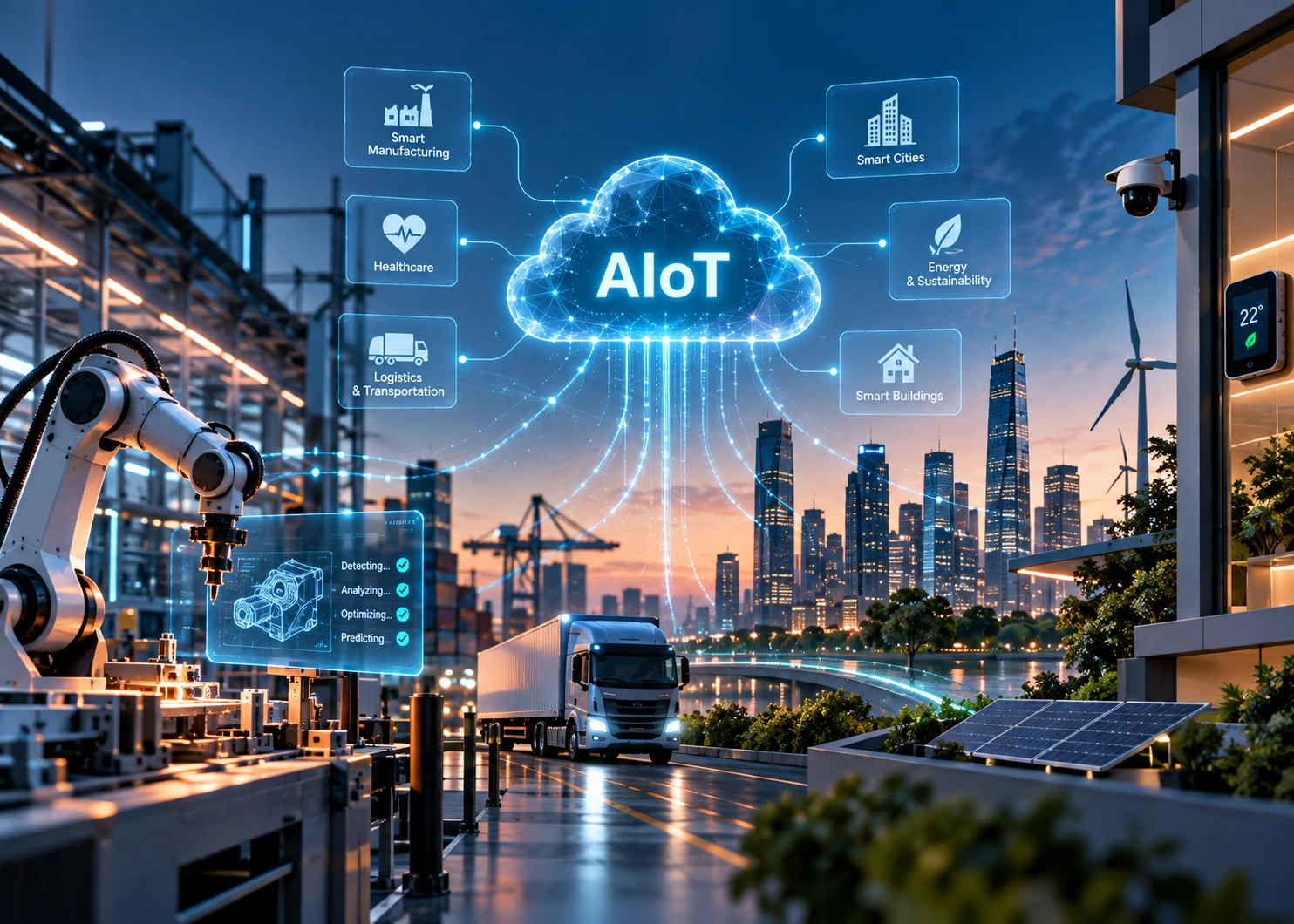
AIoT: How AI and IoT Are Creating Smarter Connected Systems
The Internet of Things (IoT) has transformed the way businesses connect devices, collect data, and monitor physical environments. But collecting data is only the beginning. The next step is making that data intelligent. AIoT, or Artificial Intelligence of Things, combines artificial intelligence with IoT to create connected systems that can analyze information, identify patterns, make…

Uncategorized
AI-Native Software Development: How AI Is Changing the Way Software Is Built
Software development is entering a new phase. Artificial intelligence is no longer being used only as a coding assistant that suggests a few lines of code. AI is increasingly becoming part of the entire software development lifecycle—from planning and architecture to coding, testing, deployment, monitoring, and maintenance. This shift is known as AI-native software development.…
Uncategorized
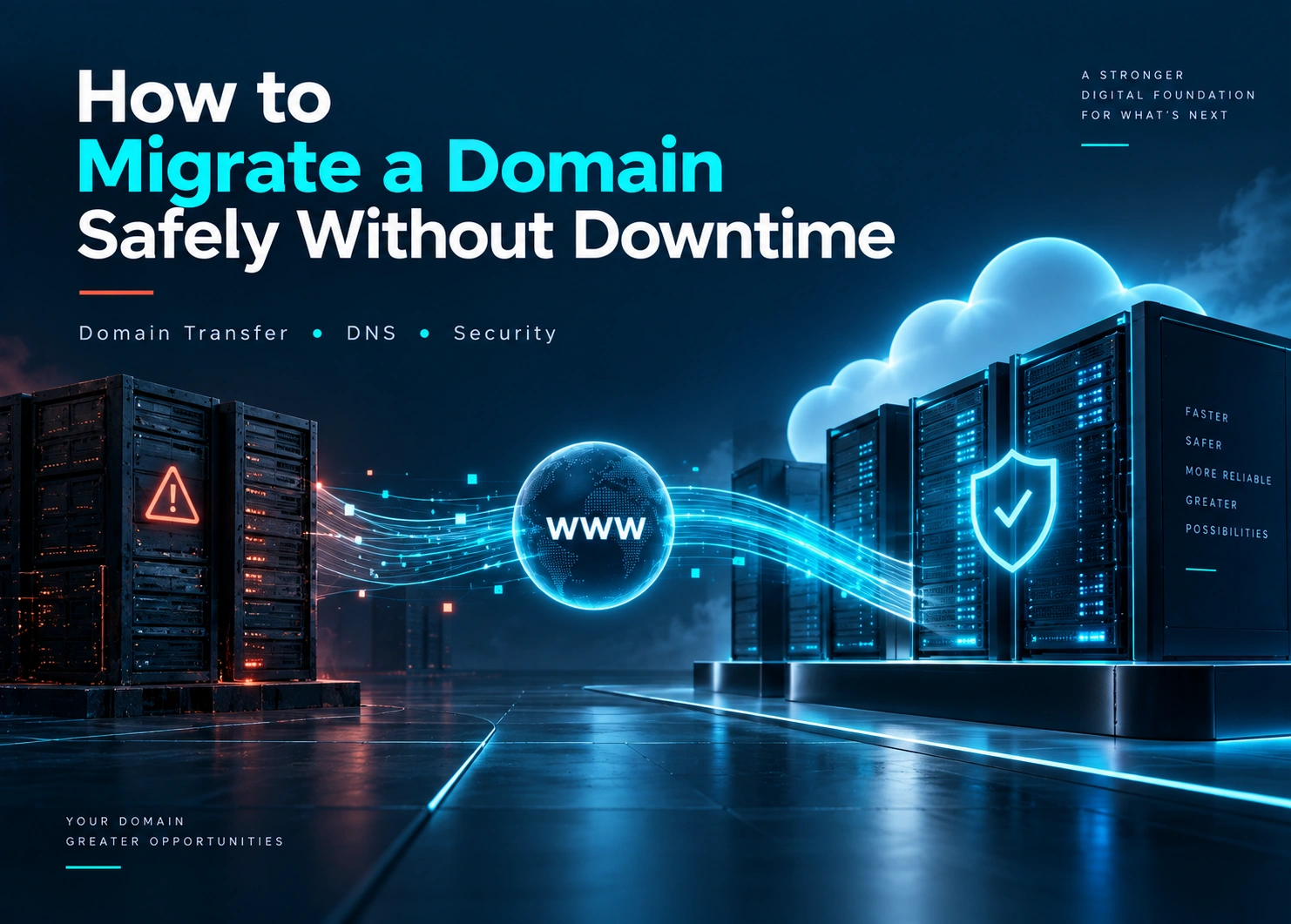
How to Migrate a Domain Safely Without Downtime
Your domain is more than a web address. It connects customers to your website, email, applications, landing pages, and other digital services. When you need to move your domain to a new registrar, poor planning can lead to unnecessary downtime, broken email, DNS problems, or delays. The good news is that domain migration does not…
Delivering scalable software that drives real business growth.

